Latex is a natural material valued for its elasticity, resilience, and breathability, making it a popular choice in bedding components. In mattress and pillow design, latex contributes consistent support with minimal contouring, helping to maintain spinal alignment and reduce pressure points. Its modular structure can be adjusted through blends to optimize firmness and response.
Mixed with other fibers like Tencel, latex formulations aim to improve moisture control and softness. The resulting blends can wick away perspiration and promote a cooler sleep surface, which is beneficial for individuals who experience heat during the night. Understanding the behavior of latex blends aids in selecting appropriate comfort levels.
Key features of latex-based products include durability, hypoallergenic properties, and low motion transfer, making them suitable for sensitive sleepers. Odor characteristics are often minimal with high-quality latex, and the material tends to resist dust mites, contributing to a cleaner sleep environment over time.
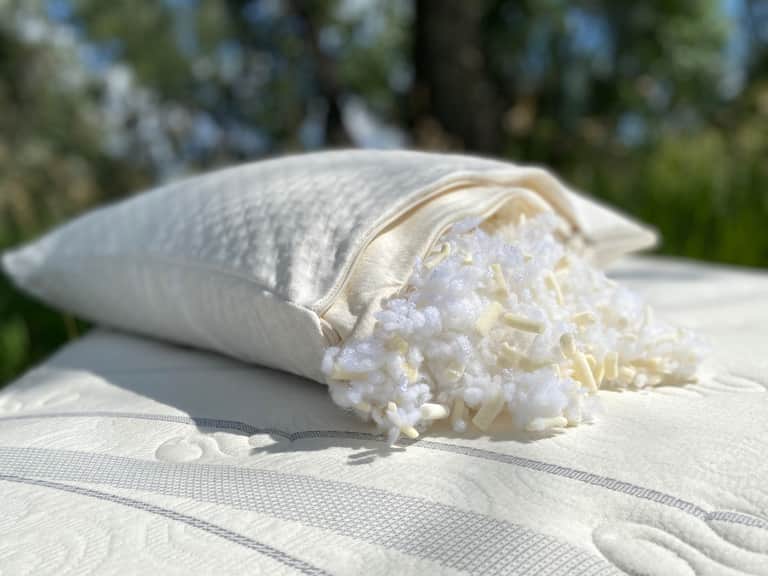
Within the bedding ecosystem, latex is commonly used in pillows and mattresses to balance support and conformity. A product such as the Suite Sleep Shredded Latex-Tencel™ Blend Pillow demonstrates how shredded latex combined with Tencel fabric can enhance airflow, softness, and loft, while maintaining stable neck and head support during rest.
For bedding planning, it is useful to consider how latex interacts with covers, sheets, and organic mattress components. As a versatile material, latex can accommodate various sleep preferences—from firmer to softer surfaces—while aligning with goals for organic and breathable sleep systems. Keywords to note include bedding, pillows, sheets, organic mattresses, and organic crib mattresses.
 Bedding